

The Ceiling Navigation Model
Recognizing what growth requires. Designing what comes next with intention.
Growth changes what an organization needs in order to succeed. As opportunities, ambitions, and complexity increase, familiar ways of leading, organizing, and working can begin to reach their limits.
The Ceiling Navigation Model helps organizations understand where they are in their growth, recognize what is creating lift, and notice when the ways of operating that brought them this far are beginning to create a ceiling on what is possible next.
Those moments offer an opportunity to make intentional choices about how the organization evolves.
THE CEILING NAVIGATION MODEL
Growth has different altitudes and ceilings.
The ceilings an organization encounters are shaped by where it is in its growth. A young organization building its foundations may encounter very different constraints from an established enterprise managing scale, complexity, or significant transition.
The Ceiling Navigation Model describes five growth altitudes. Each has distinctive sources of lift, characteristic tensions, and organizational work. Understanding your altitude can help you recognize the ceilings that may be emerging and consider what the organization needs in order to keep evolving.
The altitudes are not a ranking or a prescribed path. They offer a way to understand the organization’s current terrain and the growth questions that deserve attention.
-
The early build phase where learning, experimentation, and credibility matter as much as strategy. You test what is possible, build client trust, and start creating the habits that will later become culture.
-
Momentum increases, and your leadership gets tested in real time. Decisions accelerate, onboarding begins to matter, and your feedback and supervisory habits start shaping performance and trust.
-
The organization is operating at speed. Coordination, communication, and cross-team trust become decisive, and “rework” becomes a real cost if roles and decision paths are unclear.
-
You are building a more decentralized, higher-capacity system. Leadership can no longer be centralized, and the work becomes sustaining culture, learning, and coherence across distance and complexity.
-
Planned: A deliberate transition phase: legacy, succession, stewardship. This is the long-term strategic horizon after Soaring, when a leader diagnoses readiness for transition and makes preparations so the organization can thrive beyond them.
Emergency: When external conditions shift suddenly and options narrow. This is crisis leadership grounded in steadiness, transparency, dignity, and disciplined appreciative reframing that does not deny reality.
Growth creates new questions.
Many of the challenges of growth emerge from success. Demand increases. New opportunities appear. A team expands. The organization takes on more ambitious work or reaches people and markets it could not reach before.
As success brings greater scale and complexity, questions that once had relatively simple answers can become harder to resolve.
This is where a ceiling can appear.
A ceiling forms when the organization’s current way of operating can no longer reliably support the work, ambitions, or complexity it carries. It may show up in structures, systems, roles, decision making, leadership, or ways of working that once served the organization well but are now being asked to carry more.
A ceiling can be a consequence of growth itself.
How do we know when the way we are organized needs to change?
What should we protect because it continues to create value?
Where are roles, decisions, or systems carrying more than they were designed to carry?
What needs to become less dependent on a founder, executive, or small group of people?
How does leadership need to evolve as responsibility spreads?
What new capabilities will the organization need for where it wants to go?
Recognizing a ceiling offers a chance to understand what has changed, protect what continues to create value, and consider what may need to evolve.
DIFFERENT WAYS OF THINKING ABOUT GROWTH
An integrative framework
The Ceiling Navigation Model brings together several ways of thinking about organizations, growth, and change. Each contributes a different lens for understanding what is happening and imagining how the organization might evolve.
APPRECIATIVE PRACTICE
Begins with what is already creating value: strengths, capabilities, relationships, successful experiences, and sources of possibility. It asks what is worth preserving and building upon as the organization grows.
POSSIBILISM
Expands attention beyond what is probable or familiar to what could be created. It encourages organizations to imagine possibilities that do not yet exist and consider what it would take to make them real.
HUMAN-CENTERED DESIGN
Keeps the experiences, needs, and aspirations of the people doing the work central to how the organization evolves. It brings curiosity, empathy, and iteration to the work of organizational design.
ENTREPRENEURIAL THINKING
Brings curiosity, experimentation, thoughtful risk taking, and attention to value creation to moments of growth and uncertainty. It encourages organizations to test possibilities, learn from experience, and adapt.
Together, these perspectives help organizations preserve what creates value, challenge what no longer fits, and intentionally create new possibilities for growth.
AS THE ORGANIZATION CHANGES, LEADERSHIP CHANGES TOO
Leadership as organizations grow
Growth can alter both what leaders need to do and where leadership needs to live.
At earlier stages, a founder or small leadership team may carry much of the judgment, decision making, relationship management, and direction setting. As the organization becomes larger and more complex, that concentration can become difficult to sustain.
Leaders may need to clarify decision rights, share authority, build stronger leadership capacity beyond the executive team, and create more space for others to exercise judgment and take responsibility.
The instincts and practices that helped create success still matter, but they may need to be expressed differently as the organization grows.
What kind of leadership does this organization need now?
GROWTH IS AN OPPORTUNITY TO DESIGN
A ceiling creates a moment to choose.
When familiar ways of operating begin to limit what is possible, the Ceiling Navigation Model invites leaders to look intentionally at what should remain, what needs to change, and what the organization is ready to create.
What should we preserve?
Which strengths, relationships, capabilities, and ways of working continue to create value?
What needs to evolve?
Where are roles, structures, systems, or leadership practices beginning to limit the organization’s capacity?
What are we ready to create?
What new capabilities, ways of working, or organizational possibilities could help us grow into our ambitions?
Growth becomes an opportunity to protect what matters, rethink what no longer fits, and create greater capacity for what comes next.
PUTTING THE MODEL INTO PRACTICE
Understand your growth altitude and work through emerging ceilings.
Growth Altitude Snapshot
ASSESSMENT | FREE SNAPSHOT
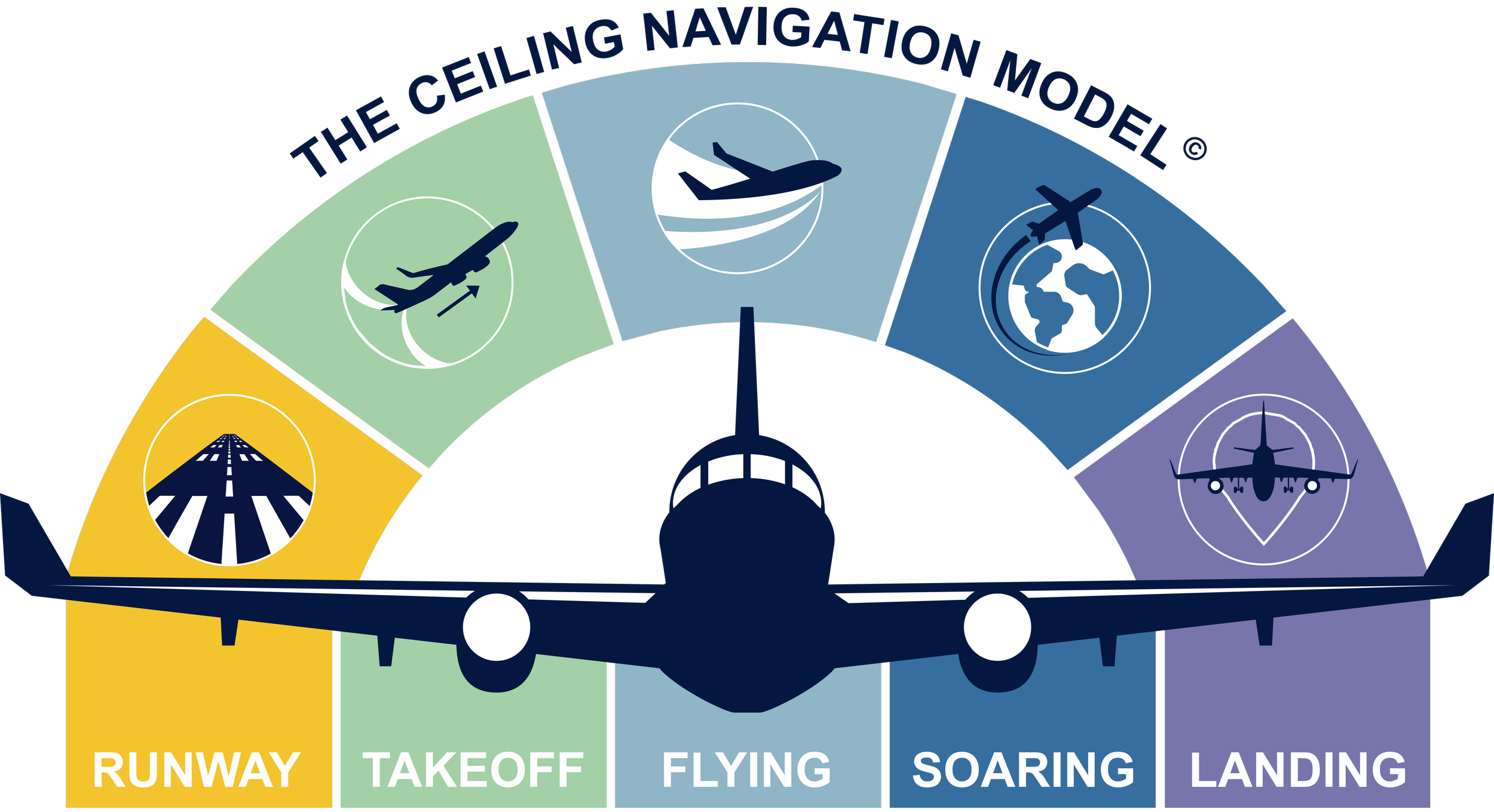
Get a quick sense of where your organization is in its growth journey and what that stage may be asking of you now.
Online Snapshot | FREE
Growth Navigation Field Guide Series
TOOLS & GUIDES | FIELD GUIDE SERIES
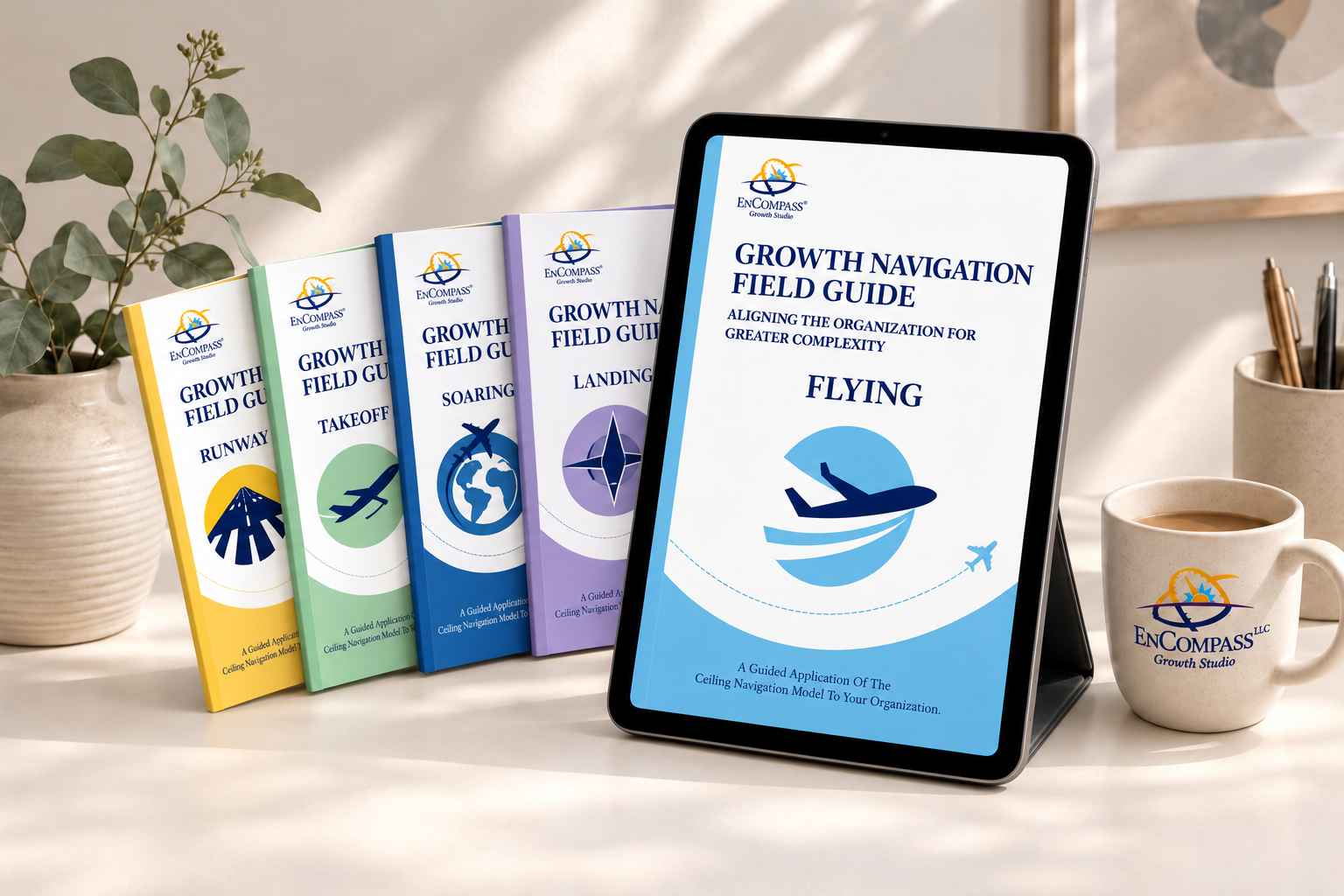
Is your organization outgrowing the way it currently works? Explore the signals, decisions, and practices that can help you navigate each stage of growth.
5-Guide Series: $85 | Single Guide: $20
Read the Ceiling: Keep What Works, Build What’s Next
LEARNING EXPERIENCE | ENGAGEMENT
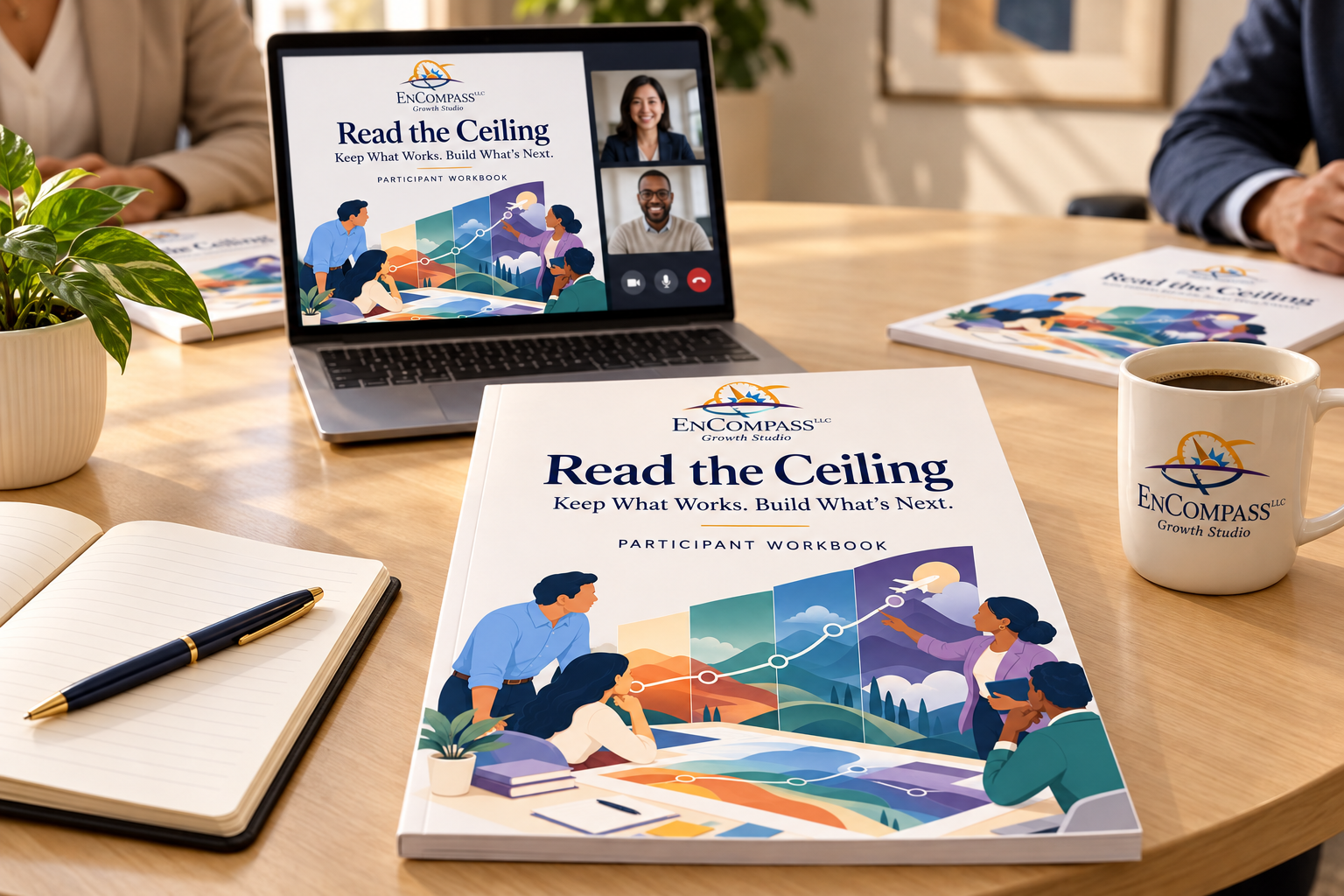
A focused engagement for entrepreneurial leaders and leadership teams who want to take the pulse of their organization, spot emerging pressures early, and make intentional choices about what to preserve, strengthen, or redesign as they grow.